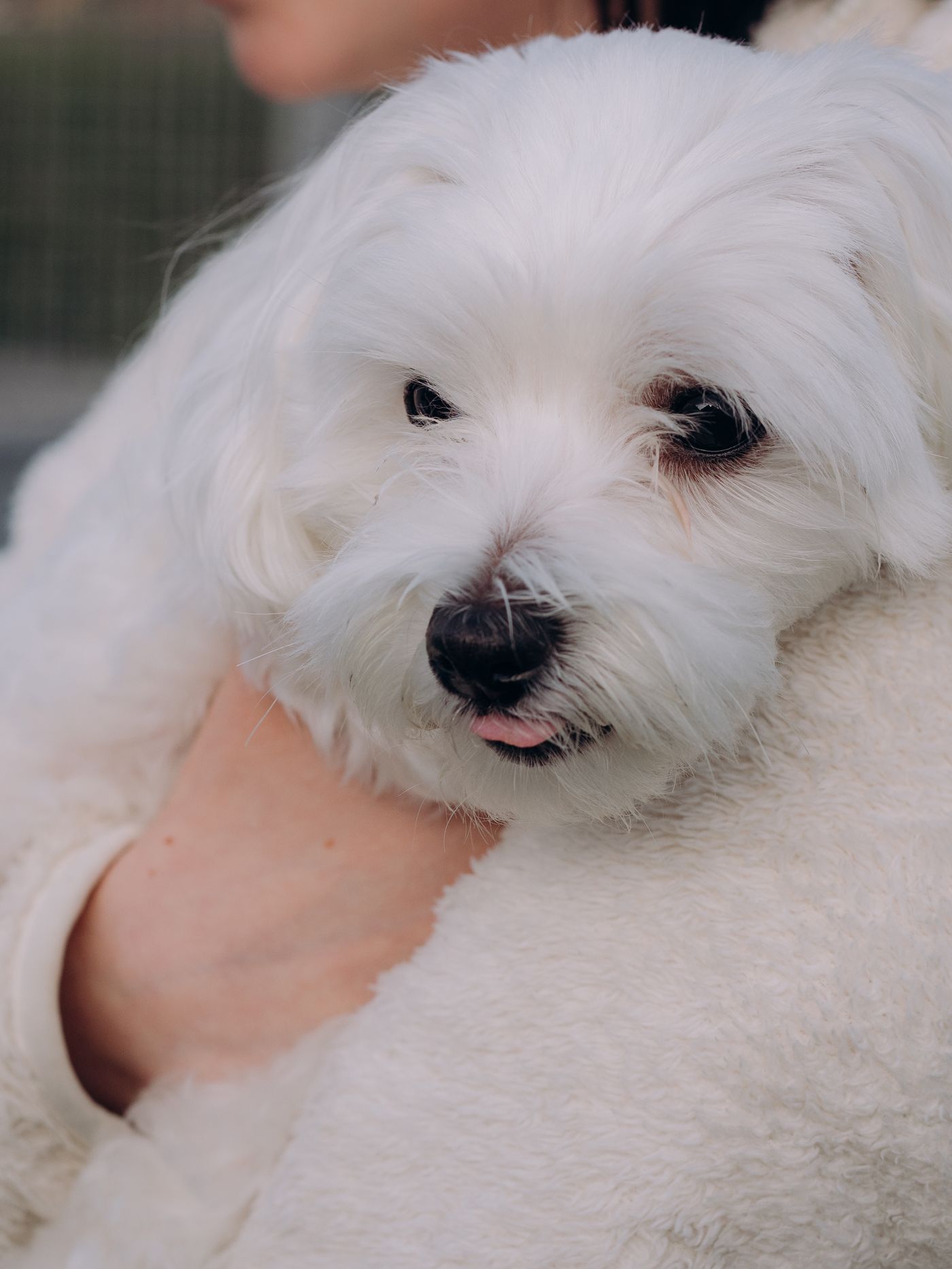
Are Maltese hypoallergenic?
The honest answer, not the marketing version.
The honest answer, not the marketing version.
Short answer: no dog is truly hypoallergenic, and that includes the Maltese. Longer, more useful answer: Maltese have hair instead of fur, no undercoat, and shed very little, which is why they're one of the classic low-allergen toy breeds. A lot of people who react badly to other dogs do fine around a Maltese. Here is what is actually going on.
Most dog allergies are a reaction to Can f 1, a protein carried in dander, saliva, and skin flakes, not the hair itself. A Maltese's coat grows continuously like human hair rather than shedding in cycles like typical dog fur, so less dander gets released into the air and around your home.
Unlike double-coated breeds, a Maltese has a single silky coat with no dense undercoat to trap and release dander in seasonal blowouts. Regular brushing and bathing removes what little dander there is before it spreads, which is a big part of why this breed is often better tolerated.
Every dog still produces some dander, saliva, and skin cells, and individual reactions vary from person to person and even dog to dog. A Maltese can still trigger a reaction in a sensitive person, especially with heavy or prolonged exposure. Nobody can promise you a specific puppy will be allergy-friendly for a specific person before you actually spend time together.
The bottom line
If you have mild to moderate dog allergies and love Maltese, it is worth a real test: spend time with an adult Maltese in person, ideally more than once, before committing to a puppy. If you have severe, medically diagnosed dog allergies, talk to your allergist first regardless of breed.
If you want to try
The best allergy test is real time with a real dog. See puppies from health-tested Maltese lines and start a conversation.
See Available Puppies